How to buy taxidermy in Europe – legally, safely and with confidence
In short: To buy taxidermy in Europe without regrets, check three things: the craftsmanship (does the animal look alive and anatomically right?), the paperwork (does the documentation match the species?) and the seller (do they name the species, inventory number and protection status before you pay?). This guide walks you through each step.
What is taxidermy?
Taxidermy is the craft of preserving an animal so that it keeps its natural appearance for decades. In a modern mount, the tanned skin is fitted over a sculpted body form; eyes, eyelids, nose and lips are finished by hand. The term also covers cleaned skulls and skeletons, antlers, pinned insects and fluid-preserved specimens.
Where to buy taxidermy in Europe
| Source | Advantages | What to watch out for |
|---|---|---|
| Specialist taxidermy shop | large selection in stock, photos of the exact piece, advice, EU consumer rights | protection status and documents per specimen, full company details |
| Taxidermist (commission) | custom pose, your own animal | waiting times of months, provenance of the animal |
| Auctions, antique dealers | antique and rare pieces | condition, pests, proof of age for protected species |
| Classifieds, flea markets | low prices | often no papers, no warranty, risk of illegal goods |
For most buyers, a specialist online shop selling ready-made taxidermy is the safest route: you see the actual specimen, know its legal status in advance and, as a consumer, have a right of withdrawal.
Step 1: Size and space
Measure the space and compare height, width and depth with the dimensions on the product page. Wall mounts need a solid wall; free-standing mounts need a spot away from direct sunlight and busy walkways. Our size classes help: S up to 30 cm, M 30–80 cm, L 80–150 cm, XL over 150 cm.
Step 2: Judge the quality
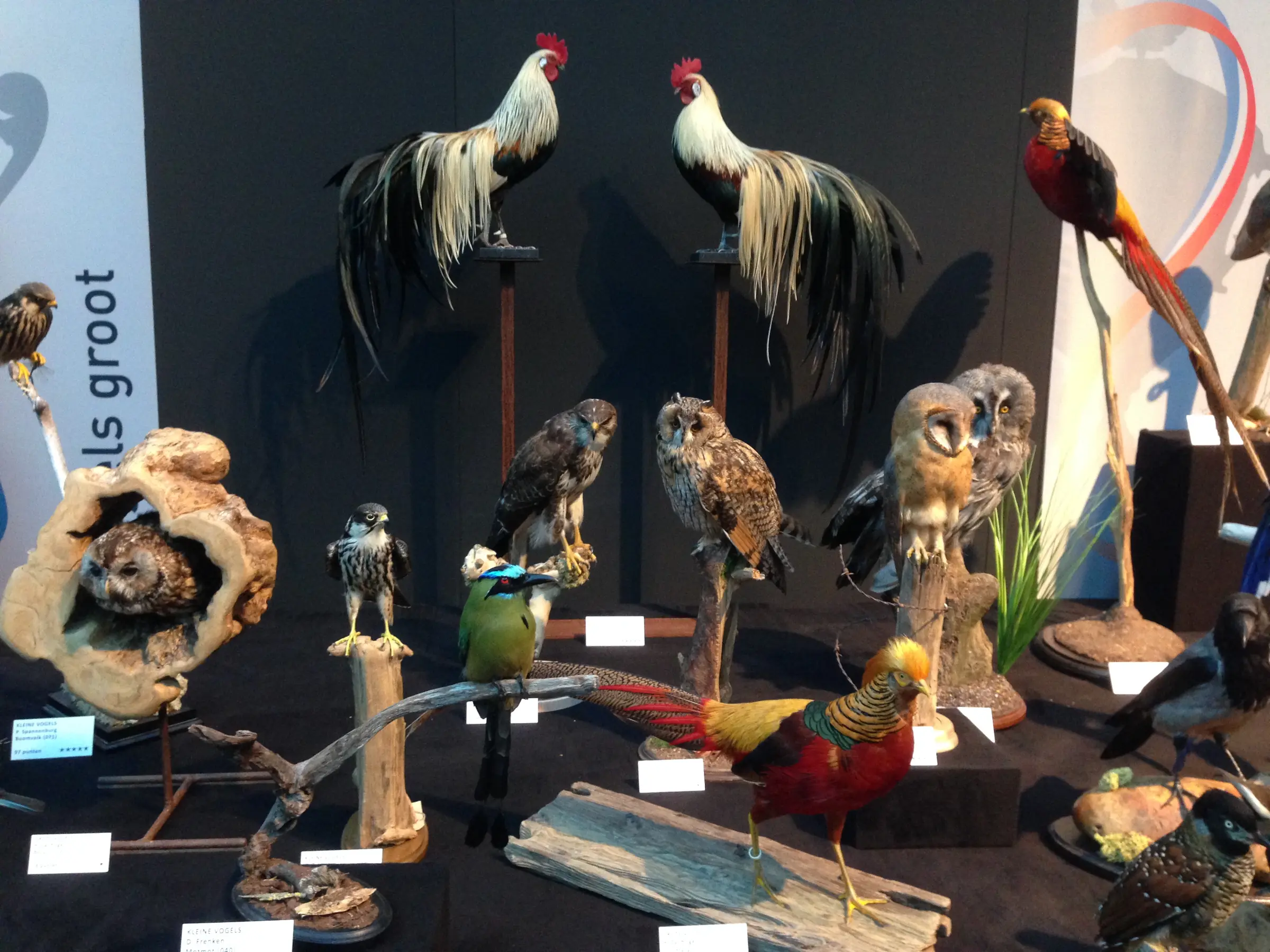
Look for a natural pose, correctly sized and set glass eyes, finely sculpted eyelids and lips, invisible seams and intact fur or feathers. Ask for close-up photos of the head, feet and back. Bird feet and beaks should be painted subtly, not glossy.
Step 3: Check the legal status
Whether a mount can be traded freely depends on the species, not on its age or beauty:
- Not listed – roe deer, fox, wild boar, domestic fowl, most insects: an origin statement and invoice are enough.
- EU Annex B – e.g. many parrots: proof of legal acquisition.
- EU Annex A – e.g. all owls and almost all birds of prey: only with an EU certificate (Article 10) for that specimen, or as a worked antique acquired before 3 March 1947.
- Nationally protected species – in Germany, for example, all wild European birds and hedgehogs: only with proof under national law.
Our guide CITES and taxidermy in the EU explains the rules in detail.
Step 4: Ask about origin
Zoos and wildlife parks (natural death), breeders, farms, regulated hunting and antique collections are traceable sources. A good seller can tell you where a specimen comes from. Read more in Ethically sourced taxidermy.
Step 5: Shipping
Mounts are fragile – ears, beaks, feathers and antler tips break easily. Look for individual packing, a mount firmly fixed to its base and freight or glass transport for large pieces and domes. Within the EU, mounts travel freely with their documents. Outside the EU (Switzerland, the UK, the USA), listed species need CITES re-export permits and often import permits.
What does taxidermy cost?
Small skulls and antler sheds start at around €25, framed butterflies typically cost €75–500, bird mounts €150–1,500 and large mammals as full mounts from about €1,500 to several thousand euros. Size, workmanship, rarity, condition and documentation drive the price.
Checklist
- Is the scientific name given?
- Is the protection status stated specifically?
- Are there photos of the exact specimen, including details?
- Do the dimensions fit your space?
- Will you receive original documents with the mount?
- Does the seller provide full company details and a right of withdrawal?
Buying from NaturKabinett
NaturKabinett is an online taxidermy shop based in France that delivers across the EU. Every piece in our collection – mammals, bird taxidermy, framed butterflies and skulls and antlers – is a one-off with an inventory number and several photos, and every product page states the protection status and the documents you receive. The shop is in German, but we are happy to advise you in English via our contact page. More English guides: Taxidermy guides.
Frequently asked questions
Is it legal to buy taxidermy in the EU?
Yes, provided the documentation matches the species. Most species need no wildlife-trade papers. Species in Annex A of the EU Wildlife Trade Regulations need an Article 10 certificate for the individual specimen; Annex B species need proof of legal acquisition.
What is ready-made taxidermy?
A finished mount that is in stock and ships now, as opposed to a commission from your own animal that can take months. You see the exact piece before you buy it.
Can I return taxidermy bought online?
Consumers in the EU have a 14-day right of withdrawal for online purchases. With taxidermy, the original documents belong to the specimen and must be returned with it.